The Vanguard has a new home, please update your bookmarks to davisvanguard.org
Showing posts with label Measure N. Show all posts

Friday, November 07, 2008

Analysis: A look back at Measure N at Why It Was Defeated

The results for Measure N can be looked at in two ways. On the one hand, the measure failed by just 2000 votes despite large amounts of public confusion about what the measure would do and why it was needed.

On the other hand, opponents of Measure N point out that Davis rarely opposes such measures, that there was only late organized opposition, no ballot argument against the measure, and yet it lost.

Both in a way are probably correct.

The Davis Enterprise in a rare moment of editorializing by city beat writer Claire St. John suggests:
"The death knell probably rang when Mayor Ruth Asmundson, who voted in favor of putting Measure N on the ballot, encouraged voters to turn it down."
I would tend to agree with that analysis. But this article will look further and argue that this was a much broader and deeper defeat than the surface numbers might suggest.

Councilmember Lamar Heystek along with his colleague Stephen Souza was the strongest supporter of the measure. The Vanguard is awaiting his exclusive statement, in the meantime, we post his statement as printed in the Davis Enterprise.
"I have learned much from those who were most vocal in their opposition to Measure N... I hope the community at large, especially those who campaigned actively against Measure N, will continue to provide guidance to the City Council on the issues that are related to the charter.

And I think that people who did not support Measure N would like to have greater engagement with the community, and I think that is something we've learned from the process.

Anything the city would want to pursue as a result of a charter will require much more discussion and a much better understanding on everyone's part."
Mayor Pro Tem Don Saylor has at times called the measure "a solution in search of a problem."
"I think this vote indicates that any future consideration of change to our city's governance structure must be clear and specific and based on deep community engagement."
In my own view, I think Councilmember Heystek has indeed learned from this setback for his cause of home rule and eventually choice voting.

Commentary

There were two critical errors along the way. One was the separate the issue of choice voting from the issue of the charter city in order to gain the support of Mayor Ruth Asmundson, a gesture that was already futile even before she changed her vote.

The other error was to bring about this process without more community involvement and buy-in. The result of both of these was a confusing and sterile measure that many did not understand more still failed to appreciate any sense of its necessity.

In the final analysis then, Don Saylor's view is right, there must be clear and specific changes to the city and it must be based on deep community engagement. The irony is that they had the latter back in 2006, but it got lost along the way.

Vanguard Analysis

The Vanguard analysis paints a far grimmer view of the measure that goes well beyond the narrow 2000 point defeat which marked a 54-45 verdict.

Looking at the city precincts only, we see that there was a considerable undervote when compared to its companion Measure W.

In the city of Davis, 28,105 people cast their ballots for the Presidential Election--of which 22,653 voted for President Elect Obama (80% if you are scoring at home).

Measure W in the city of Davis received around 26,263 votes of which The fall of which just under 20,000 were Yes votes. From the Presidential election at the top of the ballot to Measure W was a decline of just 2000 votes. That means there was only 6.6% drop off from the Presidential Election at the top to Measure W--a remarkable feat given the length of the ballot and the fact that Measure W was on the second side of the ballot and past all of the propositions.

However, Measure N received just 22,760 or 3503 less than W and 5,659 less than the Presidential election. That is a drop of nearly 20%. One in five people did not cast their ballots for Measure N.

Even the Los Rios Bond which was on the ballot in Davis and never even discussed among most people either in the papers or on the Vanguard only had 12% who did not vote for it.

The comparison is probably most striking with Los Rios because there was a measure that was never discussed and yet it was very clear what it was about and what it would do.

We can go back to the Davis Enterprise editorial a month ago, the people of Davis simply do not know what the measure was about and therefore a large number either voted against it or did not for it at all. Only 10,395 of 28,105 (about 37%) of those who cast their ballots on November 4, 2008 voted yes on Measure N.

The bottom line here is that we see the perils of putting a measure on the ballot during this type of election that is complicated. Measure W and Measure M were both straightforward. Voters knew a yes vote generally meant money for education and that a N vote would deny that money. People did not have that easy frame for Measure N and as a result uncertainty about what the measure did caused some people to vote No and others to simply not vote at all.

The future of a charter city, choice voting, and home rule will depend on this community. The perils of a council driven initiative were well-demonstrated this week. Now we will see what the people of Davis want and if this effort dies here or continues on.

---David M. Greenwald reporting

Wednesday, November 05, 2008

Measure W Wins with an Overwhelming 75% of the Vote; Measure N Goes Down

Measure W needed two-thirds majority to pass, instead it got three-quarters majority. All along, I thought it was headed to a very narrow win, instead it won by an overwhelming majority. With 100% of the precincts reporting, Measure W received just under 22,000 votes on the yes side compared to just 7000 votes on the No side. It is an overwhelming mandate for continued high quality education in Davis.

In the coming days, I will speak to what this means and what it does not mean. Right now, let us just say that the people of Davis have spoken in a way that the few on the blog who have been dissenters all along cannot speak. Just as the people stepped up last spring to prevent disaster, the voters have stepped up to do the same. There will not be teacher layoffs, not this year, not in this school district.

Meanwhile, I would be loathe to mention that the Charter City concept rightly went down to defeat and back to the drawing board. The solace that backers of a better charter might take is that it was a narrow defeat, at least in comparison to the victory of W. Just 2000 votes separated yay from nay. And so, if Councilmember Lamar Heystek and Stephen Souza are so inclined, we can have a real public process this time and put a good measure on the ballot, that all of us can get behind. Measure N was not that measure.

But this morning belongs to Measure W and its backers. The Vanguard spoke by phone last night when it was not certain that W had passed, but it looked like it would.

Janet Berry has twice saved this schools district. First as the head of the Davis Schools Foundation and then as the Co-Chair of the Yes on Measure W committee.
"I am encouraged by the early returns and the fact that the community is really coming together and showing that it values education."
School board member Gina Daleiden who called me around 5 pm to tell me that they had won this election, but she did not want that said at the time with three hours to go before the ballots even closed. She told me at midnight last night:

"I'm thankful that we live in a community that truly values education. When times are difficult our community steps up and supports our children and our schools. "

She then added:
"This one of the broadest coalitions I've ever seen behind a campaign. I think that that's quite a testament to the school support that our community gives to education and our schools. "
She pointed out the support of the Chamber of Commerce, Downtown Business, Yolo Taxpayers Association, all of the PTAs, the Realitors, the Aggie, the Sacramento Bee, the Enterprise, the Vanguard, you name it.

Finally after 1 pm last night, the Vanguard spoke with District Superintendent James Hammond.

First, the Vanguard asked the Superintendent how he felt at this time:
"With the preliminary numbers, I'm obviously encouraged. I am definitely feeling good about our ability to weather the financial instability of the state and try to at least protect certain programs and protect any significant cuts that would affect the district in the future. Obviously there are no guarantees, because we now have to wait to see what the January budget from the governor states. But we're definitely in the position to take local control of the programs that our community is accustomed to having. "
The Vanguard then asked him what the future held with the prospects for the state budget looking very bleak in the foreseeable future:
"We obviously are going to have to keep a very close eye on how the state's budget is going to create a local impact for us here in the district. We definitely want to make sure that we have a good understanding of the revenues that the state is following short on in its projections if any midyear cuts are forced upon us. Also at the same time, try to build a reserve to try to be able to spread it over a multiyear budget we are required to submit."
Finally, the Vanguard asked him if there was a possibility with a bad budget forecast of future parcel taxes, a possibility he immediately and clear discounted.
"You know, I don't see that being a realistic meaneuver any time in the very near future. We've already gone to our community two years in a row , but obviously that's ultimately a board decision. In the near foreseeable future, I don't see that being a consideration."
The people of the district have shown overwhelming support once again for the district and for education. However, it should not be viewed as any kind of blank check. More than a year ago, many people eventually voted for this measure because they believe in education and have always voted to support education. But there seemed from so many I talked to, mixed feelings about a number of topics.

We will talk about this later in the week. In the meantime, the district deserves not so much to celebrate but to take a collective breath. It has indeed been a very long year for the district and the district with this vote survives though it will not prosper, not with the governor already threatening additional cuts and the people of Davis about tapped out.

---David M. Greenwald reporting

Monday, November 03, 2008

Election Wrap Up and Prediction

Tomorrow we actually have some important local news that we have to cover, so today is going to be our wrap up of the election coverage from the past few days.

So here's what we want to know today, predictions, post them in the comments section and then debate them out.

Electoral college: Does anyone think that McCain will win tomorrow? How many electoral votes do you think that Obama will get? Does he get over 350 electoral votes?

Senate: Do the Democrats get to 60?

Measure W: Does it get to the 66.7% it needs to pass?

Measure N: Does it get 40% of the vote?

Statewide:

Really just going to focus on two...

Proposition 8, Same Sex Marriage: Does it pass?

Proposition 4, Abortion, Parental Consent: Does it pass?

That should keep people busy.

In case you missed it, here is our wrap up coverage.
Measure W

There is really no issue that the Vanguard has covered more than Measure W, here is the latest coverage that we have had on that issue.

Last we argued that if Measure W fails, Emerson closes. We also argued that if Measure W passes, Emerson likely but not certainly stays open. The basic reason for this is logistics. The logistics for closing Emerson are just too tricky.
On Friday, we covered a story on the Measure Q oversight committee, interviewing Bob Schelen, who argued pretty convincingly that the district has been very transparent in their process to the oversight committee. Moreover individuals can come in and ask questions of the district as well.

We also found out from Bruce Colby that the district does pay for cooking lessons to their staff. The only cost to the district is the employees who take the lessons. He calls it a low cost employee professional development program. And of course the main goal is to provide more healthy food choices for the students that they will eat.

He suggested that he would sit down with anyone who is interested and go over the budget.

Finally, he suggested that after the election there could be a Vanguard sponsored Q and A with him and the Superintendent.

The big news for the week came from Dweezil. Dweezil came out and endorsed Measure W yesterday.

And if you missed it, the Vanguard posted a late update with the full letter she submitted to the Enterprise.
Measure N

As many know, the Vanguard has come out against Measure N. Our view is simple. I would be supportive of a city charter that is properly written and narrow, but I think this charter is too broad. It would allow too much power to future city councils. I would like to see this charter get voted down and a committee formed to draft a new one that is much more specific.

We have also provided somewhat balanced coverage on the issue alloting space to both sides.

I accidentally omitted Rick Entrikin's name yesterday when I was mentioning this piece, so my apologies...

The big news on this yesterday was Mayor Asmundson's short letter to the editor changing her position:
"On further consideration, I now believe that Measure N is not in the best interest of Davis voters. Please vote no."
In addition, we posted from Nancy Price's letter to the editor, also in opposition.
"My objection to Measure N is that there has been virtually no communitywide presentation and discussion of what is allowed under a general law city or a charter city. Yet, we are asked to vote on a fundamental change in governance that will have far-reaching consequences."
Proposition 8

I was not originally going to talk about this Proposition today. The Field Poll released last week showed it failing by a very small plurality 49-44. This is getting particularly nasty with ads going back and forth, including some pretty nasty ones on both sides. We were watching the TV coverage in Roseville where street protestors have lined the streets with signs--because that is going to matter for a statewide iniative. I have no idea which side is going to win, but I suspect it will depend on who turns out to vote.

Polling in 2008

In fact, all of the polling in general is going to depend on this. This is an interesting year if you like to watch polling as I do. This year more than any, the model for voting matters.

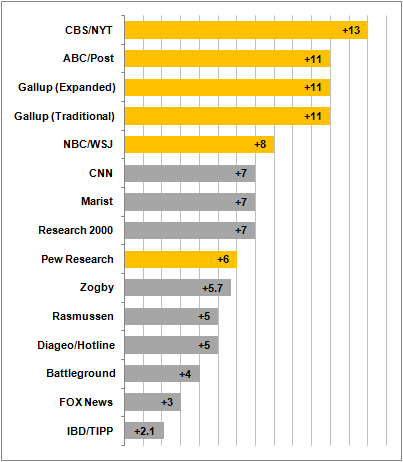
There has been a systematic difference in the polling for the Presidential race based on assumptions. Those polls that have shown the narrowest leads are the ones that have most closely adhered to a traditional voting model resembling 2000 and 2004. But will the electorate look like that where Democrats and Republicans were even in 2004?

I doubt it. Gallup has tried to bridge the gap by having two likely voting models, one based merely on past behavior, the other based on voting intentions.

But there is something else going on and the polling site FiveThirtyEight.com has captured some of it. How many African-Americans who have been apathetic in recent years will come out to vote for the first African-American President? And how many young people.

Looking at youth dominated sites, one example is Facebook where Obama has like a 70%-24% lead among those who have mobilized to get out the vote. If you do not use Facebook, you may not understand what this means, but there is an application that allows people to set their "status" to get out the vote, and by a huge margin most have mobilized for Obama rather than McCain. That is a snap shot, but a telling one.

Here is what FiveThirtyEight.com has shown, there is a gap between those polls that poll cellphone-only voters, who are most likely to be younger voters and those who do not. Those in bright contact cellphone-only voters and there is a noticeable gap there.


What does this mean? Depending on youth turn out, the Obama lead could be understated even in the more generous models.

We just do not know. And that's why they vote.

So we'll find out tomorrow. In the meantime, tell us what you think.

---David M. Greenwald reporting

Monday, October 27, 2008

Vanguard Ballot Initiative Recommendations

While the Vanguard does not endorse candidates, we do make recommendations on issues. Many of these you can of course glean simply by reading the articles on this site. But since I have had a number of calls and emails over the last wee asking how I would vote and a number of issues, I thought I would put this in one place.

I also attach a sheet at the bottom with a link to the Courage Campaign who have compiled a list of 10 progressive organizations and how they are voting. Although other than on Prop 11 there are no disputes on which way to vote, some groups do not recommend on some of the propositions.

I will start with the local measures and then deal with the statewide issues.

DAVIS BALLOT MEASURES

MEASURE N: CHARTER CITY: NO. This measure would determine whether or not Davis would have a charter city enacted. In theory, I would be supportive of such a concept, but I think this charter is too broad. It would allow too much power to future city councils. I would like to see this charter get voted down and a committee formed to draft a new one that is much more specific.

MEASURE W: DJUSD PARCEL TAX: YES. For $120 per parcel voters of the city of Davis can ensure that core programs and teachers remain in tact. We are talking about elementary science, music, some HS athletic programs, as well as keeping class size down. If this does not pass, the district faces a $2.4 million deficit which means that teachers and programs get cut.

STATEWIDE BALLOT

PROP 1A: HIGH SPEED RAIL: YES. This would begin construction of a train that connects San Francisco to Los Angeles via San Jose and Fresno. This is a project I have been wanting for at least 15 years. Create a fast and convenient alternative transportation system to get people out of their cars. This is the most important project that we can fund this year.

PROP 2: STOP ANIMAL CRUELTY: YES. Goes without saying humane treatment for farm animals. We're not talking a lot--enough space for animals to beable to move around, stand up and sit down. This seems like a no brainer to me and the arguments against about costs and competitiveness do not make a whole lot of sense.

PROP 3: CHILDREN'S HOSPITAL BONDS: YES. I see no reason not to expand children's hospital facilities around the state.

PROP 4: PARENTAL CONSENT FOR ABORTION: NO. Proponents argue that this will get teens to talk their parents about sex. I do not believe that you mandate parent-teen communications. I think it places teens at risk who fear the response of their parents more than they fear other things. It is just not a good idea. One thing I never see in these proposals is how big a problem this actually is. If it is a problem, I think there are other approaches that would be more effective and starting well before pregnancy and abortion issues arise.

PROP 5: NONVIOLENT OFFENDER REHABILITATION: YES. I am a strong proponet of alternative forms of punishment. I think we put way too much emphasis on incarceration and our prisons are being overwhelmed with non-violent sex offenders. The program has the possibility of saving the state between $1 billion and $2.5 billion per year.

PROP 6: SAFE NEIGHBORHOODS ACT: NO. This basically does the opposite of Prop 5--it extends and expands mandatory sentencing and it also takes money from the rest of the state's beleagured budget and puts it into more prisons and correction spending. This may be the worst initiative on the ballot in my opinion and that includes 4 and 8.

PROP 7: RENEWABLE POWER STANDARD: NO. This bill may be well intentioned putting more resources to solar and wind projects by mandating that we get 50% of our power from renwable sources by 2025. The problem is that opponents believe that the measure is poorly written and would cause more harm than good. When the opponents include Sierra Club and Conservation league, then I tend to believe that statement.

PROP 8: ELIMINATES SAME-SEX MARRIAGE: NO. I believe that consenting adults should have the right to marry the person that they love regardless of gender. To me this is a no-brainer and almost every argument against it is based on fear. For those who suggest that same-sex marriage is a threat to traditional marriage, look at the divorce rate, it seems that marriage is under fire much more by people who do not respect marriage rather than people who desperately want to wed.

PROP 9: Victims' Rights and Protection Act of 2008: NO. Some of these provisions are not bad including notification and participation of victims in criminal justice proceedings. However, opponents argue that these are already in law. They also believe that these provisions would end up costing the taxpayer hundreds of millions. I am not nearly as opposed to this one as the Prop 6, but it does not seem the type of reform we really need.

Prop 10: California Alternative Fuels Act: NO. This is another one of those bills that look good until you realize who is supporting it and what it would actually do. One the plus side: The funding it provides will allow the generation of electricity from renewable sources, and provide consumer rebates for the purchase or lease of "clean alternative fuel vehicles". Th bill is sponsored by Boone Pickens, many have derided Pickens and Clean Energy Fuels for sponsoring this initiative because it may set up the company and Pickens for a financial windfall. Again, League of Conservation Voters and Sierra Club support it. This would take $10 billion out of the state's general fund over 30 years. The proposition was initiated by one person/interest group and as such lacks the vetting that would have come had it gained input from a wider variety of sources.

PROP 11: REDISTRICTING: NO. This sets up an appointed bipartisan commission to handle state redistricting. We already have a bipartisan commission that handles redistricting, it's called the state legislature, they are elected by the voters in California. From what I have seen, voting reforms generally create more harm than good. The system we have now has been in place for over 100 years.

PROP 12: VETERANS' HOMES BOND: YES. Basically renews a home loan program for veterans that dates back to 1922. The bond must be periodically renewed--this would be the 12th renewal. Enables veterans of current wars to get affordable loans and the bonds are repaid by the veterans themselves. Do not see a downside to this one.


---David M. Greenwald reporting

Sunday, October 26, 2008

Guest Commentary: In Support of Measure N

by Stephen Souza and Lamar Heystek

We wish to rebut a recent e-mail in which Mayor Pro Tem Don Saylor outlines his argument against Measure N.

Mr. Saylor argues that few cities in California have charters, and the cities that do have charters have more specific ones than what Measure N proposes.

However, the recent trend is that steadily, more and more general law cities are turning to a charter (currently, 112 cities have charters), and in the history of California, no charter city has sought to revert to general law status. Furthermore, charters naturally become more specific with time as the people of charter cities desire to exercise local control more and more fully. Measure N presents a document that asks whether or not the people of Davis wish to have the broader policy latitude that charter city status confers. If their answer is yes, we anticipate that charter will evolve to continue reflecting the community’s specific interests.

Mr. Saylor alleges that Measure N seeks to solve a problem that does not exist.

However, there are problems that exist now, and there will be unforeseen problems in the future, stemming from the state’s stifling of the city of Davis’ power to act in the public’s interest. Measure N provides options for solving current problems such as the unnecessarily excessive cost of upcoming public works projects, including the City’s wastewater treatment plan upgrade. As currently conceived, the upgrade is projected to cost taxpayers over a fifth of a billion dollars. Because the city of Davis lacks a charter, it is precluded from utilizing “design-build delivery,” a streamlined method of planning and construction where the architect and contractor work as a single team.

In the traditional “design-bid-build” model, a project is broken into phases: the city first hires an architect to draft plans, then it selects a construction contractor through the bidding process. In design-build construction, a single group of professionals handles all phases of design and construction under a single contract, potentially speeding up the process, reducing the city’s liability for planning errors and compressing the construction timeline, which in turn saves the people of Davis millions of dollars in water and sewer rates. Failing to recognize the often unnecessary costliness of delivering city services does the taxpayers of Davis a disservice.

Mr. Saylor is wrong about the charter amendment process. Under Measure N, no charter amendment would be implemented without a vote of the people.

We disagree with Mr. Saylor’s assumption that the people of Davis will abuse the charter amendment process – Davisites have historically displayed judiciousness in exercising their current powers of referendum, recall and initiative.

Mr. Saylor ascribes shifting motivations to supporters of a charter.

However, four members of the City Council made clear that in placing Measure N on the ballot, a charter would provide the people of Davis options on issues ranging from local public power financing to local elections to the protection of our local ordinances. A consistent desire to have local control over these issues does not constitute shifting motivations.

Mr. Saylor implies that the charter does not recognize the people’s right to decide on issues such as choice voting.

However, the charter recognizes the people’s purview over all issues. We recognize that the method of electing councilmembers is fundamental matter that the electors – the people of Davis – should decide on. Should they decide to implement choice voting, they may also decide to encode this in the charter.

Let it be clear that Measure N does not automatically establish choice voting. It merely permits choice voting as an option to be considered further, in keeping with the voters’ will on Measure L back in 2006.

Mr. Saylor cites the passage of Assembly Bill 811 as an example of the continued narrowing of the differences between general law cities and charter cities. He argues AB 811 would allow general law cities to implement the same sort of solar assessment district under development by the city of Berkeley. However, Mr. Saylor fails to cite another important piece of legislation in this area: AB 1709, which permits charter cities to pursue the financing of renewable energy and energy efficiency improvements for new development through the establishment of a Community Facilities District. The CFD law, AB 1709, has proven to be a more flexible financing tool than the much older AB 811 – the difference will be important as local agencies, public finance professionals and the lending community begin to explore the rapidly-changing area of renewable energy financing. AB 1709 may be less problematic with respect to existing home mortgages than AB 811, which levies the entire principal amount of the assessment at the time the contractual assessment is established. In short, there remain substantive differences between the options we have under a charter and those we have under general law.

Mr. Saylor implies that Measure N attempts to circumvent existing tax laws that otherwise supersede a charter.

This is untrue. Measure N does not propose any new taxes, nor does it lower the threshold for the passage of taxes. Measure N does not make any recommendations about future taxes. In fact, if passed, the charter can be amended to preclude the city from considering certain types of taxes which the state can allow general law cities to consider in the future.

Mr. Saylor opines that state government has no intention of encroaching on such matters as local land use, agricultural preservation and inclusionary housing.

However, history shows that the state has allowed cities to have less and less power, not more. What Mr. Saylor fails to understand that a charter provides a meaningful legal mechanism for preserving a city’s purview over municipal affairs. We agree that a general law city cannot protect itself from the state’s expansion of matters of statewide concern because, by definition, it is at the mercy of the state’s interpretation of municipal affairs. However, a charter does provide a city a more tenable legal avenue – in a court of law – to protect what the people define as municipal affairs. The city of Davis must be prepared to do all it can to preserve its jurisdiction over such matters as local growth control. Since the charter is a more durable document, codifying voter-approved measures in perpetuity in a charter would further reinforce the people’s prerogative with regards to municipal affairs.

Mr. Saylor argues further that there has been no thoughtful or inclusive process by which the city’s governance structure has been considered.

However, the 1994-6 Governance Committee and the 2004-5 Governance Task Force, composed of Davis citizens appointed by two City Councils, both deliberated in public meetings on the issue of a charter and ultimately recommended the type of charter that Measure N proposes.

Finally, Mr. Saylor implies that “Hancock, Jefferson, Franklin, Adams and the rest” would have argued for something other than Measure N.

No one, not even Mr. Saylor, really knows for sure what they would say. However, they probably would agree that localities have a right and a duty to consider their relationship with higher levels of government, because doing so provides a check and balance on power at all levels. In our opinion, Measure N is a useful step in providing that check.

Thank you for considering our points. We hope this helps you understand our support for Measure N.

Tuesday, October 21, 2008

Guest Commentary: Measure N Opponents Speak Out Against City Charter

by Pam Nieberg, Nancy Price, Don Shor, Rick Entrikin

The City Council has placed on the November ballot a Charter, Measure N, for the City of Davis. We are being asked to make a fundamental change in how we are governed. Under a Charter, we are no longer subject to state laws and regulations that have served us and other California cities well for many years. Rather, we would be governed at the will of the council majority in all aspects that deal with municipal affairs.

Davis is a “General Law” city, governed by the general laws of the state. More than 75% of California’s cities are General Law cities. Fewer than 25 % are Charter Cities. Individual Charters vary in length, detail and scope of issues addressed. Most are detailed documents and were adopted to address specific problems or issues in the specific jurisdiction. The proposed City Charter, drafted by two members of the City Council, is one page, does not address any specific issue, contains vague language, and gives broad powers to only five elected officials.

The proponents claim a Charter would give more power to the people, but this is not borne out in the Charter language. The Charter specifically states in part:
“The City shall have all powers possible for a city to have under the Constitution and laws of the State of California as fully and completely as though they were specifically enumerated in this Charter. The City shall have the power to make and enforce all ordinances and regulations with respect to municipal affairs, subject only to restrictions and limitations provided for in this Charter, and with respect to other matters subject to applicable general laws. Concerning municipal affairs, this Charter shall supercede all inconsistent laws.” And “The legislative power of the City shall be vested in the City Council, and in the people through the power of initiative and referendum, as provided for in the California Constitution.”
Clearly, this language gives power to the City Council to adopt or abolish ordinances and regulations with no restrictions, as none are included in the Charter. Future amendments to the Charter itself would require a vote of the people. However, the Charter gives future councils the power to adopt ordinances without a vote of the people in certain instances where it is not currently allowed. The “power” given to the people, to resort to referenda and initiatives, is already our right. Moreover, this Charter contains no specific recommendations relevant to municipal affairs.

Because the Charter is non-specific, we cannot determine what its impacts might be. Many arguments for the Charter have been proposed including that it could allow us to adopt Choice Voting, establish an assessment district to finance solar infrastructure, levy certain types of taxes not permitted by State law, and protect current city land use provisions.

ORIGINAL GOAL: CHOICE VOTING. In 2006, the people of Davis approved an advisory vote to allow us to “consider” Choice Voting. There has been no substantive public discussion of Choice Voting since. Our city attorney has confirmed that if this Charter is adopted, the Council would have the power to implement Choice Voting without a further vote of the people. Such a fundamental change in how we elect our representatives requires a thorough discussion and should be a decision left to the people. This discussion should occur prior to adopting a Charter that would permit implementation of Choice Voting. The Charter should also contain language that clearly states that Choice Voting would be permitted and should provide enough information for the electorate to make an informed decision.

ASSESSMENT DISTRICTS AND TAXES: Charter City status is not necessary for establishing a solar installation assessment district. Prior to 2008, the use of Assessment Districts for this purpose was permitted only to Charter Cities. However, in 2008, the state enacted legislation that permits General Law cities to implement assessment districts to fund solar power infrastructure.

There also has been talk regarding assessing a new tax in the form of a property transfer tax. This type of tax is not permitted under state law, but has been adopted by some Charter Cities (though this has been challenged). A property transfer tax is a tax on the seller, and sometimes the buyer, upon the sale of real property. This tax would unfairly harm seniors, who want to sell and downsize or move to be near their children, as well as young families, who want to sell to move up in the market to a larger home. This tax and others not currently permitted under state law could be adopted if this Charter passes.

DEVELOPMENT AND PLANNING: Proponents have argued that the Charter could be used to protect our progressive growth policies in Davis. They have threatened that the State might decide at some point to overturn these policies, and that including them in the Charter would protect them. However, the State has the power in any case to pass laws that are “issues of statewide concern” that would govern all cities, whether Charter or General Law. Some proponents argue that we can use the Charter to protect Measure J (the right to vote on changes in land use from agricultural to urban uses) by amending the Charter to include it without a sunset clause, thereby protecting it permanently. We don’t need a Charter to do this. We can place Measure J, without a sunset, on the ballot right now, if we wish to permanently protect it.

CONCLUSION: The Council acted hastily in placing this on the ballot. Such a fundamental change in how we are governed requires a thorough public discussion on whether or not we want a Charter and what we want it to address. The proponents argue that once the Charter passes we could then have this public discussion. Shouldn’t we have this discussion first?

There is no compelling reason to change how we are governed in Davis. There has been no public movement to become a Charter City. The proponents of the Charter should start over and create an open, inclusive community-wide process to determine whether we want a Charter and then, if we agree, work with the people to produce a document that addresses specific public policy issues or community problems, not a vague, non-specific document that could result in serious consequences for our City.

Please join us in voting NO on Measure N.

Monday, October 20, 2008

Heystek, Souza, and Adler's Statements in Support of Measure N

On August 24, 2008, Davis Councilmember Lamar Heystek wrote a Guest Commentary for the Vanguard: "The Case For Home Rule for Davis."

Yesterday, Councilmember Heystek was joined by Councilmember Stephen Souza in the Davis Enterprise for their column on Measure N.

I have been critical of both their measure and the efforts to educate the public on this issue. However, I believe the public should gain all of the facts so that they can make an informed decision. For that reason I will give a full presentation of the points that the two current councilmembers make as well as the letter to the editor by former Mayor Jerry Adler.

Councilmembers Heystek and Souza argue that home rule allows for more local control and more efficient self-government.

They write:
"General law cities are bound by the state's general law, even with respect to municipal affairs. Charter cities are not. This means that a charter city has more home rule authority than a general law city because the charter city has more authority over municipal affairs."
This is the fundamental point that proponents of home rule, proponents of charter cities make--who should make the laws that govern a city--the city or the state legislature?

They argue that cities should make the laws that govern a city, stating:
"Now, as members of the Davis City Council, we believe the people of Davis should exercise their power and assert their municipal rights more fully under Measure N, the proposed city charter, which provides home rule for Davis."
Now in principal that sounds good, but what about in practice? In other words, what do we gain by having home rule?

The obvious one is choice voting. We cannot enact choice voting without being a charter city.
"Unfortunately, the current governor, Arnold Schwarzenegger, has vetoed Davis-friendly legislation such as Assembly Bill 1294, a bill unanimously endorsed by the City Council, that would have allowed general law cities like ours to decide for themselves whether to adopt choice voting for council elections. Gov. Schwarzenegger's ability to veto legislation that permits general law cities to govern themselves more fully stifles the city of Davis' progressiveness and ability to be on the cutting edge."
They move beyond choice voting as well. The next one is public electrical utilities.
"Several charter cities across the state provide for public electrical utilities, which Davis residents supported when they voted overwhelmingly in favor of Measures H and I in 2006. The prospect of providing electricity through a community facilities district for solar infrastructure financing makes public power an exciting possibility under charter city status."
They argue that choice voting would allow us the ability to be innovative without interference from the state legislature.
"Examples of our innovation to date include our agricultural mitigation, inclusionary housing and green building ordinances. However, the state may decide to legislate that general law cities like Davis cannot establish such high standards, rendering our own benchmarks meaningless. Measure N would allow Davis to codify and protect these laws in the charter if necessary."
But then they come back to general:
"The issue really isn't whether you support public electrical power (or choice voting or other ideas), but whether you support the notion that Davis shouldn't have to ask the legislators in Sacramento for permission to adopt such ideas. The latter issue, not the former, is the question that Measure N poses."
Actually, isn't the issue exactly about whether we support choice voting? This charter would not be before the voters without the issue of choice voting? Jerry Adler below even argues that's why this issue needs to come forth. So isn't that exactly the point?

At this point, if you are like me, you are saying, I don't mind the positive aspects of this program, but is there not a downside? Does not the City Council amass tremendous amount of power under this proposal--and does the charter as written provide the public in Davis with safeguards against such seizures of power by the city council?

Here is their response to this criticism:
"Some argue that the true beneficiary of power under a broadly drafted Measure N is the City Council, not the people at large. After all, on a weekly basis, the City Council makes most of the decisions on behalf of the people. We understand people's skepticism about what they consider the prospect of handing more powers to a City Council they may or may not agree with. However, just as the people of Davis have shown they possess the strength to override the council, they certainly have the strength to change the balance of power on the City Council at the ballot box every two years."
This is where I am not sure they have hit the point home. Here is an example for me. We have Measure J that allows us to vote on land use changes for proposed development outside our current boundaries. That does not mean I want a city council that puts 10 measure J votes on the ballot every two years. It takes time, energy, and resources to fight that battle. So just as I want checks and balances in congress so that every time we change party control in government we don't throw out our complete law books, the same applies for the city council. I want city council to have limited power to make major changes without voter approval and this seems to weaken those current protections by enabling the council to enact things by ordinance rather than by charter amendment. Now that is correctable in the charter proposal.

Their response to that is as follows:
"In fact, nothing prevents the people of Davis, either through their elected representatives or through the power of initiative, from actually downsizing and restricting municipal powers that otherwise could be granted through a charter. An example of this is Measure N's explicit ban on binding arbitration, a labor negotiation practice that has financially crippled city agencies such as that in San Luis Obispo."
Now they are putting the onus on the voters to limit power of the council rather than putting the burden elsewhere to expand the power of council. Write the law in such a way that the people can choose what innovations we want and I am likely going to be all for it, but as written now, it is too much power to give any council, not just one that I disagree with.

They address the issue of taxation:
"Speaking of finances, don't forget that any new tax measure under the charter would still be subject to the people, per Proposition 218. Our support for the charter does not come from a desire to impose taxes that we cannot levy now, considering the existence of current untapped mechanisms. Under general law, the city of Davis already has the power to levy a utility user's tax and increase its business license tax, but it hasn't."
I do not know if that is reassuring or not to the public. I will let some of the readers

The other sponsor of Measure N is former Davis Mayor Jerry Adler.

Here are a few key excerpts from his letter to the editor:
As a former City Council member signer of the ballot argument in favor of Measure N, the charter city proposal, I am especially interested in opposing opinions. Two such opinions recently appeared on this page.

One writer proclaimed that 'Measure N was prematurely and hastily placed on the ballot,' ignoring the facts that first in 1996 and again in 2005 two governance bodies strongly recommended in favor of a broad general language charter such as now proposed 'which allows the greatest flexibility for full exercise over the municipal affairs of the city. This means the minimum amount of detail in the charter.' Both reports have been discussed extensively by the council, the press and the community since 2005.

Both writers referenced choice voting, a matter not in the charter. The second writer opined that 'it appears to be a solution in search of a problem ....' Whether 'it' referenced choice voting, Measure N, or both is not clear.
He then cites the 2006 advisory vote on Measure L which without opposition polled about 55% and the fact that choice voting cannot be enacted without a charter.
"Ignored under any interpretation was the November 2006 majority advisory vote in favor of further consideration of a choice voting system. Any such system cannot be implemented or even seriously considered unless a broad general language charter is in place that allows enactment and any necessary amendments by ordinance."
And while he is correct on this point, the question that continues to emerge for me is why not enact both the charter and choice voting with one vote. More and more I just do not see there being a strong reason not to do so. If the rationale for putting Measure N on the battle is still Measure L, then let's keep them together.

Mr. Adler continues:
"Contrary to the first writer's dark hint 'about the wide implications of becoming a charter city,' there is no down side to adoption of the proposed charter."
That is a pretty sweeping statement by the former Mayor that ignores much of the discussion that has occurred on this blog laying out large concerns.

He lays out much like Councilmembers Souza and Heystek do, the upside, but his failure to consider even the possibility that there might be a downside, I think is a bit disingenuous. Reasonable people can disagree on these proposals, but there is always a downside to making changes, and that is true whether I agree or disagree with the proposals.

Later in the week, we will have some more guest commentary on this issue, for now this should be some good fodder for discussion.

---David M. Greenwald reporting

Sunday, October 19, 2008

Enterprise Opposes Measure N Due to Lack of Information

I was originally going to write about the Enterprise Endorsement and then cover the Op-Ed by Councilmembers Stephen Souza and Lamar Heystek and a letter to the editor by former Councilmember Jerry Adler all in Support of Measure N. However, I will hold off on the latter until later in the week as it deserves its own story.

This morning's Davis Enterprise has come out against Measure N. And for a very simple reason:
"Davis doesn't have enough information to decide in favor of Measure N."
Furthermore, they suggest:
"Could there be any worse time for Measure N than the Nov. 4 ballot?

Our attention is being pulled in myriad - and important - different ways, by a riveting presidential campaign, a plethora of statewide ballot measures, a handful of key local races and a critical school parcel tax."
This has been one of my concerns about both Measure N and Measure W. The voters have been swamped on the ballot. The main focus of most voters has been the Presidential Election. However, at least with Measure W, the public has seen a slew of articles and op-eds over the last few months. Moreover, last spring, everyone was aware of the condition of our schools.

While I agree with both points, and I certainly agree that the public has had its attention pulled in a number of different and important directions. And yet, if the Davis Enterprise wants to argue that the public does not have enough information about Measure N, are they not themselves partly to blame here?

How many articles has the Davis Enterprise run on Measure N? One on the measure itself on October 14--that was this week if you are keeping score at home.

Prior to that there was a single letter on October 8 to the Editor on Measure entitled: "We need more info; vote no on N." Peggy Epstein writes:
"The Davis voting public ought to be better informed about the wide implications of becoming a charter city before we vote to become one. In the meantime, I recommend a no vote on Measure N."
Prior to the October 14, 2008 article in the Enterprise, the last article on the charter was July 16, when the councilmembers voted to put it on the ballot. There was also an article on June 25, 2008.

So in the last almost six months, the Davis Enterprise has had exactly three articles on the issue. So maybe if the public is uninformed about the charter, they ought to put at least some of the blame on their themselves for failing to inform the public.

Why did the Enterprise spend so little time on this issue? Back in July, I was concerned with some of the possible consequences of the charter city proposal and implored a reporter for the Enterprise to cover it a bit more. The thought back then was that there was a lack of interest in the issue itself.

However, our story on the ballot language in mid-August drew 45 comments and some heated debates. Even more so in late August with Councilmember Lamar Heystek's op-ed. Still the Enterprise did not cover the issue despite clear interest at least by those who read this blog.

All of this said, one cannot put all of the criticism for the lack of information on the Davis Enterprise, though clearly there was not nearly enough coverage on an issue that has the potential to fundamentally change this city.

I also put the onus on the sponsors.

I mentioned this issue earlier this week, and I repeat it now. The decision to divorce the charter city proposal from the choice voting proposal was an error in my view. Why? In 2006, there was Measure L, an advisory vote about choice voting on the ballot. It drew a groundswell of support and had a large grassroots organization behind it.

Now as one of the sponsors of Measure N recently told me, many of those people were UC Davis students who have since moved on. And I appreciate that. Nevertheless the energy came from that issue and when the charter city issue was separated it seemed to sap the young energy for this change. Subsequently, I do not see the movement afoot.

This decision was made in part to gain the support of Mayor Ruth Asmundson who was willing to support a charter on the ballot but not choice voting. That gained council a 4-1 vote, but one has to wonder at least whether the measure would be stronger and have more energy with choice voting attached to it.

Second problem, this measure seems like a rushed job to get it on the ballot. Now let me explain because as the sponsors will rightly counter this measure is two years in the making. However, I would have liked to have seen a bunch of higher profile outreach meetings back in the spring with the likely ballot initiative that could have been explained fully to the public. There did not seem to be enough community discussion on this measure.

Furthermore, where is the Measure N campaign itself. I have received to this point in time no literature on Measure N. No phone calls. No door-to-door people. I even have the luxury of having both a permanent absentee voter and a vote on election day voter in my household so we get the early literature and the late literature. Nothing.

The bottom line here is that the public is not informed on this issue, the Davis Enterprise is correct about that and they are correct that that is a reason why this measure should not pass. Not the only reason as we have discussed earlier this week. However, if that is the indictment, I would like to see the Davis Enterprise take responsibility for failing to do their part to educate the public on this issue. One article since July 16 (over three months ago) is not acceptable.

And yes they have a lot to cover, but they never seem to have a problem printing their fluff pieces, err human interest stories.

---David M. Greenwald reporting

Thursday, October 16, 2008

Revisiting Measure N and Correcting My Own Errors

Up until now I had been neutral on Measure N--the charter city initiative. I have from the beginning however had some trepidations about it. Most recently I have been concerned about the potential for allowing well-financed interests put measures on the ballot and bankroll them to give themselves advantages either in negotiations with the city or in other matters.

The threat of binding arbitration and the plight of San Luis Obispo have weighed heavily on my mind. And while the council put language into the charter to prevent council actions on binding arbitration, they could not prevent voters for putting such language into the charter through an initiative.

However, even then I was willing to overlook this flaw as a remote possibility believing as I did that the council would have to put any major change to the charter before the voters. However, this belief is as it turns out completely inaccurate.

Amendments to the Charter itself do require a vote of the electorate. However, changes in law do not require amendments to the Charter so long as they are not in violation of the Charter. They could be implemented by ordinance.

Thus the City Attorney has suggested that the City Council could adopt Choice Voting by ordinance once the Charter is in place.

The upside is that the Charter would be broader than the current General Law status that we currently operate under in which we are bound by state laws that govern local municipalities. The Charter would free us up from those limitation and allow an entire array of new possibilities for new ordinances--none of which would require a vote by the electorate unless they are in violation of the Charter. And this charter is written so broadly that it allows virtually anything.

I am not comfortable allowing that degree of power to any elected body. Thus you see some of the original supporters of local control have moved against this measure in the last few weeks.

There are several critical errors that occurred in this process. I want to start however with this, I believe that both of the main sponsors of this measure--Stephen Souza and Lamar Heystek have good intentions here, have a sincere commitment to choice voting, however, I think the process was rushed, it was too narrow, and did not sufficiently engage the public. Even if this were a perfect charter, it would have difficulty passing now given the lack of community engagement and uncertainty about both the necessity and the nature of the changes.

However, there are several fatal mistakes that occurred.

The biggest was divorcing the choice voting issue from the charter city proposal. Two years ago, there was a strong and dedicated public movement for choice voting in the city of Davis. I have always had some questions about the need for choice voting and also the impact of it. But it is clear that there was a broad and diverse coalition of supporters for choice voting.

However, Councilmembers Souza and Heystek wanted as broad an agreement as possible from the City Council to place this on the ballot. In order to gain Ruth Asmundson's vote and make it a 4-1 majority, they removed choice voting from the charter. They also drew up the charter very broadly. Both of those decisions in the end killed the possibility of the charter passing for different reasons.

Removing choice voting seemed to sap the entire grassroots movement of their impetus. It also seemed to move the push far afield from its initial intent. Thus originally the focus was on choice voting, now the focus is on a charter for the city which would allow things such as choice voting but also a whole wide array of other new initiatives. On the surface that might not be a problem, but we do not see the grassroots energy that we saw two years ago.

Secondly, by adopting a broad charter, which seems to be the the trend on a state level, it enables the possibility of mischief. There is suddenly a very real possibility of a downside. San Luis Obispo again sees that become reality. They now have to deal with a $4.8 million deficit as a result of the arbitrators decision to award police officers with a 30 percent raise.

In this case, I think Don Saylor, Mayor Pro Tem of Davis has been right from the start. I have agreed with him as he suggsted that this is an solution in search of a problem. I do not see choice voting as solving any kind of problem. There may be problems within the electoral system with regards to the expense of running races, but we can look toward other solutions such as campaign finance reform and possibly district elections that do not require a charter.

I re-post Don Saylor's comments that I posted on Tuesday:

The strongest opponent of the measure is Mayor Pro Tem Don Saylor.

Councilmember Saylor told the Sacramento Bee that he thinks the "proposal is too vague and gives voters little idea what their votes would actually do."
"Most charters list some specific services, Saylor said. But this measure, he said, just gives the council broader powers.

A previous provision that talked about choice voting was deleted, he said.

"If it's intended to enact choice voting, we should specify that," he said.

Saylor said he believes moving to choice voting is so important that it should go to a direct vote of the people and not be decided by the City Council."
Councilmember Saylor is also uncomfortable with the broad powers it gives the city council.

He told the Davis Enterprise:
"Someday later, the council could come up with a boutique tax, one that we're not allowed to do in a general law city. Which means the charter is probably premature, and we ought to get our act together before we put it on the ballot."
He continued:
"Saylor said that even if the current council would put choice voting on a future ballot, there are no guarantees that future councils would be so considerate.

"The authority that happens under the charter is the City Council takes on a greater amount of potential authority, and I'm not sure that's such a good idea... I'd like to know specifically - and I think the voters should demand to know - what the charter would do, not what might it do. What, exactly, are we intending to do?"
As I said at the onset of this entry, that the breaking point for me however is that this gives too much power to the city council. I am not comfortable doing that.

I am all for local control and would be willing to look again at a new initiative that vests the power in the voters of Davis (with some safeguards). But I will not support an initiative that allows the council to have the power to pass huge changes not currently allowed under general law status, by ordinance.

But in order for me to support this, it should be much more community driven, with much more community buy-in. This process made me uncomfortable from the start because it was largely led by Mr. Souza and Mr. Heystek. Again, I do not want to disparage them, they had good intentions here, but I think in the end, they were wrong on this issue.

---Doug Paul Davis reporting

Tuesday, October 14, 2008

Silence on Measure N--Is the Charter City Initiative Doomed?

The silence was suddenly broken this morning. The focus in the city of Davis has been almost exclusively on either the Presidential election or the Parcel Tax. There has been some talk about the State senate Race. The Assembly race is of course safely in hand for Mariko Yamada. However, there is another big issue before Davis voters on November 4--whether or not Davis should become a Charter City.

You would not know it from anything we have seen or heard. Later this week most likely, the Vanguard will have a guest commentary that comes out against Measure N featuring some prominent Davisites. As many will recall, on August 24, 2008, Davis City Councilmember Lamar Heystek had a guest commentary in support of Measure N--the Case for home rule.

On July 23, 2008, we had the Councilmember on Vanguard Radio talking about the Charter City.

This morning, however, the silence on the issue has been broken with articles in both today's Davis Enterprise and Sacramento Bee. Nevertheless, given the quiet nature of the campaign, the lack of ground swell of support, and the uncertainly facing many residents about the impact of the measure, it seems highly unlikely that the measure will pass.

The Davis Enterprise article is in fact called, "Effects of a Davis Charter is Unknown."

But more than that, two years ago, there seemed to be a strong grassroots movement in support of choice voting in Davis. In order to enact choice voting however, the city of Davis must change from general law status, which gives it only the authority granted to it by the state legislature, to charter status.

The charter status would give it far broader powers to make its own rules on a variety of issues including public utilities, elections, revenue, and taxation.

There are some very good things that can come out of a charter city, Davis would not have to rely on Sacramento voters to form its own public utility like it did two years ago with SMUD. Davis could impose state of the art environmental regulation. It could vastly expand open meeting and public record laws. For choice voter fans, it could enact a choice voting system. These are the tip of the iceberg and frankly those who disparage some of these I think are being extremely wrongheaded.

On the other hand, there is a huge downside to a charter city.

Councilmember Sue Greenwald pressed the city council to put language in that would prohibit binding arbitration. The city council did. But here is the tricky thing about the charter, some suggest that the city council has more power under a charter, but I am not sure that is true. The voters also have more power under the charter.

In the town I grew up and where my family still lives, San Luis Obispo, in 2000, as a charter city, public safety employees put a measure on the ballot to enact binding arbitration for labor negotiations. We have spent much time on this blog talking about the power of public safety employees both in terms of bargaining and in terms of elections. They put this on the ballot, bankrolled it, had their members walk for it, and it passed. San Luis Obispo is a charter city.

This is from the October 1, San Luis Obispo Tribune and it shows the depth of the problem:
"The San Luis Obispo City Council filled a $4.8 million budget shortfall on Tuesday night, but not before reiterating its dislike of a binding arbitration agreement with police that forced the emergency meeting...

Although the meeting was not intended to be a forum for discussing the city’s voter-mandated binding arbitration for police and firefighters, council members renewed their complaints that the man-date has stripped them of their budget-making authority and threatened financial ruin for the city.

“Binding arbitration was a huge mistake,” said Councilwoman Christine Mulholland, who vowed to work to overturn the requirement.

Police and firefighters counter that binding arbitration is fair because they do not have the ability to strike as part of their labor negotiations.

In June, an arbitrator gave sworn police officers a 30 percent raise and increased dispatchers’ and other non-sworn police staff’s pay by 37 percent."
Could that happen in Davis? You betcha.

Binding arbitration means that a public employees union can press for arbitration at impasse and whatever the arbitrator rules, is what they get. What happened in San Luis Obispo is the police officers got a 30% payraise this year. That is right, an arbitrator from the bay area awarded them a 30% payraise. That will cost the city $4.8 million. That is their budget deficit this year. That is larger than the Davis School District's budget deficit they were facing this past winter. It is a disaster for the city of San Luis Obispo.

Now, here's what you need to understand, and again, I am not opposing this measure, only telling you what can happen. The Davis City Council put in a measure that protects Davis from binding arbitration. The city councils of the future cannot change that provision. But the voters can. They can do the same thing that happened in San Luis Obispo.

Is that a likely occurrence? No. For one thing, we have San Luis Obispo as a model, that people can use against the sponsors of such a measure, but it can happen.

Again, I want to emphasize, I have not decided how I am going to vote on this measure.

The strongest opponent of the measure is Mayor Pro Tem Don Saylor.

Councilmember Saylor told the Sacramento Bee that he thinks the "proposal is too vague and gives voters little idea what their votes would actually do."
"Most charters list some specific services, Saylor said. But this measure, he said, just gives the council broader powers.

A previous provision that talked about choice voting was deleted, he said.

"If it's intended to enact choice voting, we should specify that," he said.

Saylor said he believes moving to choice voting is so important that it should go to a direct vote of the people and not be decided by the City Council."
Councilmember Saylor is also uncomfortable with the broad powers it gives the city council.

He told the Davis Enterprise:
"Someday later, the council could come up with a boutique tax, one that we're not allowed to do in a general law city. Which means the charter is probably premature, and we ought to get our act together before we put it on the ballot."
He continued:
"Saylor said that even if the current council would put choice voting on a future ballot, there are no guarantees that future councils would be so considerate.

"The authority that happens under the charter is the City Council takes on a greater amount of potential authority, and I'm not sure that's such a good idea... I'd like to know specifically - and I think the voters should demand to know - what the charter would do, not what might it do. What, exactly, are we intending to do?"
Now according to Kelly Stachowicz, Deputy City Manager, the charter city does not change anything immediately.

She told the Enterprise:
"What it does is provide the city with flexibility to consider additional options or potential change."
Moreover, after researching dozens of city charters, many look a lot like the one Davis is proposing.
"What we found was that the charters that have passed more recently have been very similar to the approach that Davis has taken... Those charters have been brief and broad. They did not have a whole lot of detail in them about what they wanted to change and alter. In most cases the community stayed the course and passed the charter in order to provide additional flexibility."
The curious thing for me is that in 2006, when the choice voting advisory measure was on the ballot and it passed largely with no organized opposition with 55% of the vote, there was a large grassroots movement behind it.

This year, with the step to make choice voting operational, is there a large grassroots movement behind it? All I have seen are Stephen Souza and Lamar Heystek, the principal proponents on council, leading a small and informal campaign on the measure. There does not seem to be energy behind it.

My sense from the response to these articles is that most Davisites have no idea that this measure is on the ballot, no idea what this measure will do, and no idea why they would want this measure in the first place. That is a recipe for defeat at the polls.

I hate to agree with Councilmember Saylor, but I think he has a good point when he argues that the charter is premature and that we ought to have our act together. It seems to me that the charter is premature, that the council was acting largely on its own, and that there is no huge groundswell of support for the charter as there was for choice voting.

I could be completely misreading the situation here, but right now, I just do not see the impetus to pass this measure.

But there are three weeks until the election, I doubt there is much solidified opposition to it either, but right now, I do not think this issue has been sold to Davis, I do not see the money behind to sell it to Davis nor do I see a volunteer network base who will push it through at the grassroots level.

At this point, I think proposal is dead on arrival. But we will see for sure in the coming weeks.

---Doug Paul Davis reporting

Monday, August 25, 2008

Commentary: Why I Strongly Support Measure W--The Parcel Tax

I have been thinking about writing this commentary for several days now, ever since I put the work into the two articles last week on the parcel tax. As I was putting together those articles, I questioned myself. Why was I going through all this effort in support of this measure? This is not generally what the Vanguard does. The Vanguard covers the dark underbelly of Davis, exposes malfeasance in government, protects people from the excesses of governmental power, shines light on subjects not often covered enough. Why this issue?

As I was pondering this question, the answer of course was right in front of my face. The answer actually came to me last week during my interview with Jann Murray-Garcia.

Some people have used the closing of Valley Oak as an excuse to vote against the parcel tax. However, I think they have it backwards. You see, no one supported keeping Valley Oak open more than I did. I will match my 70 articles on or about Valley Oak, the late night meetings, the special coverage, against anyone's passion. Unless you sat on Davis OPEN itself, you will not win. And even then, I'll take it to a tie unless you are a certain dragon and the lovely lady who stands inside there come rain, heat, or fog.

No folks, if you believe in Valley Oak and the Valley Oaks of the world, you need to support the parcel tax. If you are worried about the achievement gap, then you need to support the parcel tax. If you do not want future parents to anguish over what school their kids will go to, then you need to support the parcel tax.

You see, unfortunately, and I am not casting aspersions at anyone, it's just the way things are right now, but when the economy goes south, when funding gets tight, the first things that go are funding to special programs and unfortunately by special programs I mean minority schools in Davis.

When I first saw the budget cuts list last winter, one of the things that drew my attention was cutting the climate coordinator position. I have been critical of the climate coordinator. But I also know how hard and how long people struggled to get that position created in the first place. The Human Relations Commission had a townhall meeting with former Superintendent David Murphy on the issue of bullying and racism, hundreds of parents came, students came forward with horror stories, it took a lot of work. Superintendent Murphy was at times intransigent. But in the end, the HRC and the community won out.

And now it was going to be gone in one fell swoop. It is not because the position is not important, it is not because the school board was against having the position, it is simply that when you have a choice because cutting elementary school science and the climate coordinator, it is not really much of a debate. And yet I know full well why that position was created in the first place and it will hurt a lot of kids if it is canceled.

I remember the meeting in 2007 when they were discussing the report from the Achievement Gap Task force and their recommendations, and how Tansey Thomas stood up and pointed out a very similar report from 1990 that was put on the shelf as soon as passions cooled and times got tough. I remember that in 2007, every single candidate running for the board brought up that as one of their goals--to help close the achievement gap. I do not know if I have heard the word uttered in 2008 and you know why? Because they are fighting to keep from firing 100 teachers.

At the end of the day, I believe in my heart of hearts that when budget times get tough, the first people to suffer are those who can least afford to suffer. Those who are the most vulnerable. It happens in all walks of life. The people who suffer the most are the most recent ones hired, those at the bottom end of the totem pole, those who are least able to create a safety net.

In Davis, I believe that the children of affluent middle class backgrounds will thrive regardless of whether or not the parcel tax passes. Are they better off with better schools with more challenging programs? Of course. However, they will prosper regardless. It is the children of those who are less fortunate who will not prosper under more difficult times with programs cut. These are the most vulnerable kids. These will be the ones to suffer the most. The children who go to the Valley Oaks of the world who had a school where they were thriving only to see it closed due to budget considerations. And yes, I am convinced that there are other schools that are very good in this district, but I do not believe you can replace that sense of empowerment and sense of community that was at work at Valley Oak Elementary School.

And though Valley Oak is now closed until further notice, there is still much to fight to protect, which is why I cannot in good conscience punish other children for mistakes made by the school board.

People have talked about fiscal mismanagement as a reason to vote against the parcel tax. I know something about fiscal mismanagement in this district as I spent a good four or five months researching what had happened in the district under Superintendent David Murphy and Budget Officer Tahir Ahad.

A few things about that I want to share. The first thing is that I did this investigation with full and complete cooperation from the school district and several of the board members. This investigation would not have been possible without their assistance. Moreover, the district went above and beyond the call of duty in assisting me. They absolutely wanted the public to know exactly what had happened under the previous administration. Two of the board members went on the record to discuss it with me.

The second thing is that the new school board, elected in 2005, cleaned up most of the problems that had occurred under the previous administration. Tahir Ahad left the district and eventually was replaced by Bruce Colby as the new chief budget officer. David Murphy left the district and eventually was replaced by James Hammond as the new superintendent. Frankly, James Hammond alone is reason to vote for this parcel tax, I cannot think of a better person to do this job than Dr. Hammond. I talked to him the day after the board decided not to support him on the charter school and all he could talk about was how sorry he was that he did not have another week to convince them to take the chance on it. He was genuine about that loss. No blame, no political posturing, just sincere compassion for those students.

The fiscal problems in this district are not the result of the actions of the current board. Not one single member of this board was around when the decision was made to put the facilities bond on the ballot. Not one single member of this board was there when the decision was made to hire Tahir Ahad or David Murphy for that matter. And not one single member of this board was there when the deadline was missed for matching funds to Montgomery.

But the majority of this board was in place when every single one of the FCMAT recommendations were carried out, when a new CBO and Superintendent were hired, when the Montgomery funding was rescued by a concerted and joint effort of the board and the interim Superintendent, when the fiscal ship of this district was righted. This board deserves the trust of the voters in handling the taxpayers money and giving the board the resources to continue to make this district one of the best in the state.

Finally folks, people are complaining about raising taxes again, one year after the previous parcel tax was passed. People are complaining that the number is $120 rather than $80 which would have been more likely to pass. I can appreciate both of those concerns.

However as far as the $120 goes, the district is asking for the amount of money that they believe they need in order to continue to fund the programs that have been listed here.

I have been critical of the city's overindulgence of certain public employee salaries and t he risk of raising more taxes to pay for their fiscal irresponsibility. Moreover, the amount of money people will pay in water rate hikes will dwarf the meager $120 annual tax increase. We are talking about up to $200 per month for water rate hikes compared with $120 per year for the parcel tax. This is on top of other fees, taxes, and possible rate hikes. There is really no comparison. Moreover, if I am going to pay out more money, I would choose to give money to help children be educated and help teachers earn a better living. Those are my priorities.

My biggest fear in all of this is that people may use the wrong reasons to not support education in Davis. It is not the children's fault that the previous administration made a series of very serious errors. It is not their fault that you may feel overburdened in your taxes, overwhelmed by a poor economy, a bad housing market, high fuel prices, etc. I understand all of that. But at the end of the day once again, we only get one shot at educating the youth in this community, they get only one shot at childhood, and for some kids, they need all the help they can get.

I hope for their sake and theirs alone you will consider supporting this tax as a modest investment into the future of these children, this community and this country.

---Doug Paul Davis reporting

Sunday, August 24, 2008

Guest Commentary: The case for home rule for Davis

by Lamar Heystek

In Davis, the power of the people is real, and anyone who seeks to tamper with it is playing with fire. The campaign to defeat Measure X, the 2005 Covell Village proposal, is the perfect example of that. In the face of a six-figure developer-driven effort, a grassroots campaign of dedicated Davisites managed to beat the odds and garner a resounding rejection of the largest development proposal in the history of Davis. I am proud to have been part of that campaign.

Now, as a member of the Davis City Council, I believe the people of Davis will be able to exercise their power and assert their municipal rights more fully under Measure N, the proposed city charter which provides home rule for Davis.

When the City Council unanimously passed a resolution last year supporting Assembly Bill 1294, which would have allowed general law cities like ours to decide for themselves whether to adopt choice voting for Council elections, I wrote to Governor Schwarzenegger on City letterhead asking for 10 minutes of his time to explain why the City of Davis deserved this right. Through an official letter of his own, my offer to meet with the Governor was curtly turned down.

As others, including Councilmember Greenwald, have pointed out, all other University of California host cities are charter cities. This reinforces the fact that home rule encourage cities to pursue innovation, not promote the status quo. For example, several charter cities across the state provide for public electrical utilities, which Davis citizens supported when they voted overwhelmingly in favor of Measures H and I in 2006. The prospect of providing electricity through the financing of solar infrastructure makes public power an especially attractive possibility under charter city status.

Examples of our innovation to date include our agricultural mitigation, inclusionary housing and green building ordinances. However, as a general law city, the state may decide to legislate that general law cities like Davis cannot establish such high standards, rendering the benchmarks we have set for ourselves meaningless. Measure N would allow Davis, under the power to govern its own municipal affairs, to codify and protect these laws in the charter if necessary. This protection would also be afforded to Measure J, which establishes the right for the people to vote on the development of peripheral ag land. In fact, Measure N by design alludes to Measure J, stating that:
“[M]anaging and limiting growth… are essential elements of local control and therefore are municipal affairs. The intent of this Charter is to allow the City Council and the voters to exercise the maximum degree of control over land use matters within the city of Davis.”
However, the issue really isn’t whether you support public electrical power (or choice voting or other ideas), but whether you support the notion that the city of Davis shouldn’t have to ask a bunch of people in Sacramento (including Governor Schwarzenegger) permission to adopt such ideas. The latter issue, not the former, should be the primary focus of Measure N as much as possible.

Some argue that the true beneficiary of power under a broadly drafted Measure N is the City Council, not the people at large. After all, on a weekly basis, the City Council makes most of the decisions on behalf of the people. I certainly appreciate that argument because my election to the City Council, to some degree, resulted of people’s disenchantment with the decisions of a majority of the Council. Thus, I understand people’s skepticism about what they consider the prospect of handing more powers to a City Council they (or I, for that matter!) don’t agree with most of the time. However, just as the people of Davis have shown they possess the strength to override the Council and defeat a billion-dollar development, they definitely have the strength to change the balance of power on the City Council every two years (or more frequently, through the power of recall, which, along with the power of referendum, remains intact under a charter). Let’s not pretend that this is beyond the people’s reach.

In fact, nothing prevents the people of Davis, either through their elected representatives or through the power of initiative, from actually downsizing and restricting municipal powers that would otherwise be granted through a charter. Take the proposed charter, for instance: as a municipal agency, the City of Davis would still negotiate with its employees under meet-and-confer. Upon the suggestion of Councilmember Greenwald, Measure N bars the Council from adopting binding arbitration, which has financially crippled city agencies such as San Luis Obispo. This is a fine example of how the city can limit its own powers.

Speaking of finances, don’t forget that any new tax measure under the charter would still be subject to the people, per Proposition 218. Personally, my support for the charter does not come from a desire to impose taxes that we do not levy now. In fact, I am skeptical about renewing the taxes we currently levy in the absence of a more responsible fiscal policy. I have strongly questioned, and will continue to question, the presentation of new tax measures (including the extension of existing ones) unless we truly begin to exercise control of our skyrocketing personnel costs, for example. Under general law, the City of Davis already has the power to levy a utility user’s tax and increase its business license tax (but hasn’t), so for me, potential new revenue streams don’t play into my support for Measure N.

I am proud to join councilmembers Sue Greenwald and Stephen Souza and Mayor Ruth Asmundson in supporting a charter because the people of Davis clearly deserve home rule. Davisites have proven that they are willing and capable of governing their affairs. My hope is that the people will keep an open mind about Measure N in the coming weeks and months. I will do my part to gain more information and share it with as many Davisites as possible before Election Day. I hope the people of Davis continue the discussion by providing their insights, whether those insights support or oppose the charter. Ultimately, the power is in their hands.

Lamar Heystek is a Davis City Councilmember. He is Co-Chair of the Yes on Measure N Committee and a longtime supporter of Choice Voting.

Wednesday, August 13, 2008

Language of Argument for Charter City Ballot Initiative Sparks Disagreement Amongst Supporters

In mid July, the Davis City Council by a 4-1 margin, voted to put a Charter Proposal on the November Ballot. The Vanguard has learned that Councilmember Sue Greenwald has decided not to sign the ballot argument in favor of the measure out of concerns for the accuracy of the language.

The language in question is:
"There are no additional taxes involved in becoming a charter city, nor does it increase the city’s ability to raise or impose taxes in the future."
According to Councilmember Greenwald she did not sign the ballot statement because in her view, the phrase was not accurate.

The concern here is that under a charter, a city can impose a property transfer tax which would impose a tax any time an individual moved from one home to another.

Under general law status, a city cannot invoke a property transfer tax. So the first step a city must take is to adopt a charter city. Becoming a charter city therefore removes a major hurdle towards imposing the tax.

On the other hand, neither City Manager Bill Emlen nor City Attorney Harriet Steiner agree with this assessment. As Bill Emlen pointed out to the Vanguard via a phone conversation, even if the Charter passes, the only way to impose a property transfer tax is to amend the charter by a vote of the people of Davis. That is a significant hurdle and similar to the hurdle that it would require under Prop. 218 standards for other types of taxes.

In City Attorney Harriet Steiner's "Impartial Analysis of Measure N" she argued that Davis would "remain subject to all State Constitutional limitations."

These include:
"... those on taxation and property related fees, such as Propositions 13 and 218. No new taxes could be imposed without voter approval."
For those concerned about taxation, this is a key point that is formalized by the City Attorney putting it into writing. It therefore appears that by-and-large the ballot language is largely correct--for most practical purposes it does not increase the city's ability to either raise or impose taxes in the future. It may give the city an ability to have additional means by which to raise taxes, which is I think what Sue Greenwald's point is. However, even those additional means by which to tax are still subject to voter approval--this is the current process by which taxes can be increased now.

Councilmember Stephen Souza who signed the document along with Mayor Ruth Asmundson, Councilmember Lamar Heystek, and former Mayor Jerry Adler, said that he and co-signers of the argument "stand by the truthfulness of the Argument for Measure N."

While I understand the point that Councilmember Sue Greenwald makes--becoming a charter makes it possible to have a property transfer tax--I think that the argument's language is accurate. If this charter passes, it will be no easier to raise or impose taxes under a charter than it is now. The voters of Davis will still make the final determination on taxation although they may have more options to choose from in terms of the means by which taxation can be imposed.

I have not decided whether I will support or oppose this charter. I still believe I have a good deal to learn about the charter before I can make an informed decision. However, from what I have read and from those I have spoken with in the last few days, I do not believe the issue of taxation should be a determination as to whether or not people support the charter. Everything I have found indicates that the protections in place under a General Law City will remain under the proposed Charter.

That said, I do agree with Councilmember Greenwald that a property transfer tax is unfair as it puts the tax burden on those who either wish to upgrade to their "dream home" or who wish to downsize to a smaller more affordable home, perhaps later in their lives. There it puts a burden on younger families looking to get a better home and older citizens who are looking for a smaller and more manageable home as they enjoy their later years. This does not seem to be an equitable distribution of the tax burden.

Moreover, I am concerned about the burden being placed on citizens to live in Davis with the growing pressures of the city's budget. The current salary structure and increase in budgetary allocation to upper management salaries is putting a strain on city resources. It is currently forcing the city to forestall critical repairs to roads and other infrastructure in order to balance the budget. We are going to have to pay for this imbalance either through less services, more taxes, or greater pressures to continue to develop. This does not even include the current discussion on water and the possible large increases to water rates that residents may have to face. For those worried about the cost of homes pricing people out of this community, the high taxes and high utility rates at the very least will exacerbate that trend.

However, from the perspective of this initiative on the ballot, it does not appear to change the protections that residents have against future taxes.

The question before us should examine the reasons why such a change should be necessary. Councilmember Don Saylor has been the only consistent dissenter on council on this issue. He has repeatedly questioned whether there was a reason that we need to do this right now and has termed it "a solution in search of a problem."

Proponents have pressed for these changes out of a desire to see a Choice Voting system be implemented. Choice Voting requires the city adopt a Charter in order for it to be legal to implement. The question I think people need to look into is what the possible unintended consequences of a Charter City might be and then whether those potential consequences are ultimately outweighed by the benefits of a possible Choice Voting system.

These questions will not be resolved today, however at this point it appears that tax concerns should not be a reason to oppose a Charter City initiative and Measure N.
---Doug Paul Davis reporting